On Friday, 28 August 1964, Slatington's week-long centennial celebration was reaching its end. On a sunny, low 80-degree day, Upper Main Street had been roped off for a block party. Now I was too little to remember that one, but when Slatington again blocked off Upper Main Street to celebrate the sesquicentennial in 1989, we stood on Main Street by the traffic light drinking some beer.
That Friday evening in 1964, the centennial homecoming dinner was held in the gym of the Slatington High School. (That building is now the Northern Lehigh Middle School.) Almost six hundred people packed the gym. When dinner finished, festivities moved into the auditorium which was completely filled. There was a program of speeches, recollections about the town's history and several musical selections. "In between the speakers there was the local talent" that performed. (The Slatington News, 3 September 1964)
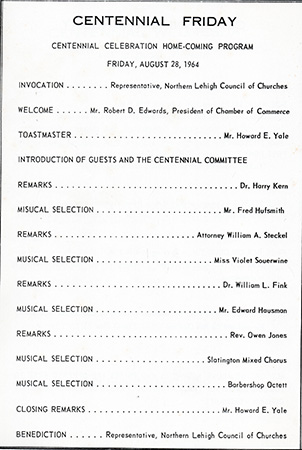
Edward Hausman, "concert pianist and professor of music at Skidmore College in New York, formerly of town, played several solo numbers and accompanied the vocalists on the program." (The Slatington News, 3 September 1964)
"Fred Hufsmith, who went to high school in the borough and was a radio star many years ago before retiring and settling in Yonkers, NY, sang the beautiful Serenade and the nostalgic Hills of Home." (The Morning Call, 29 August 1964) Have a listen to Mario Lanza singing the Hills of Home.
So, who were these two, distinguished musicians, Hufsmith and Hausman, from Slatington who were performing again in Slatington in August 1964?

Edward G. Hausman (1925-2013) was the son of Floyd Hausman (1892-1947) and Ida Kern (1900-1996). He grew up at 231 Main St., a beautiful, Queen Anne style home on lower Main Street in Slatington.
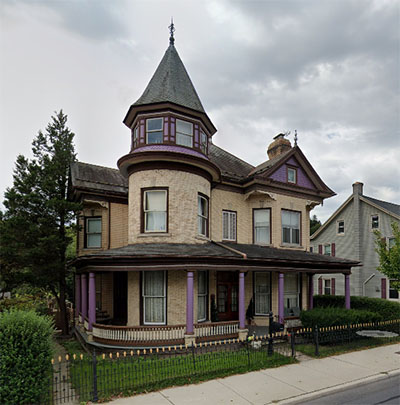
231 Main St., Slatington, PA, photo credit: Google Street View
Hausman graduated from Slatington High School as the valedictorian of the class of 1943. He participated in band (clarinet) and orchestra (piano) all four years and was selected for district band, district orchestra and the state band. His future ambition, as noted in the yearbook, was "to be a concert pianist."
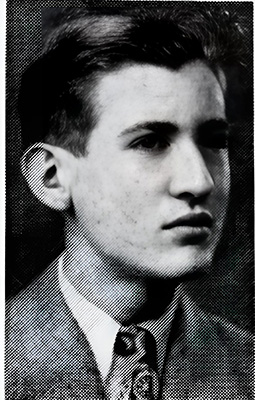
Edward Hausman; photo credit, The Morning Call, 8 September 1946
His piano teacher was Miss Thelma Roberts (1903-1979) of Slatington.
Over the years, Roberts operated studios in Allentown, Northampton, Palmerton and Slatington in a teaching career that spanned more than fifty years. A 1920 graduate of Slatington High School, she continued her studies at the Ithaca Conservatory of Music (now part of Ithaca College) in Ithaca NY, graduating in 1925. Returning home to Slatington after graduation, she did several piano recitals on radio station WSAN in Allentown. In 1926 she opened a piano studio in her house on First Street, from which she continued to offer classes as late as 1978. She must have taught thousands of students over the years. She was also the organist and choir director at St. John's Lutheran Church in Slatington.
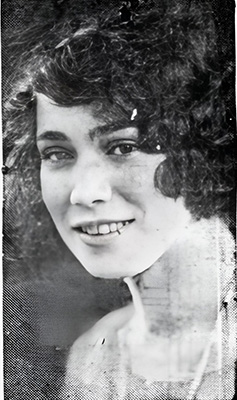
Thelma Roberts; photo credit, The Morning Call, 20 September 1925
After graduation from Slatington, Hausman was off to the University of Pennsylvania in Philadelphia, where he earned a degree in chemistry while pursuing pre-med studies. He was also elected to Phi Beta Kappa, the prestigious academic honor society.
From March 1944 to July 1945, Hausman served with the U.S. Navy as a personnel officer at the Naval Receiving and Discharge Station, Lido Beach, Long Island, NY.
Hausman's "first public recital [was] in St John's Reformed Church, presented by the Miller Bible Class of the church in Slatington." The Morning Call newspaper reported on that recital, "Slatington Pianist to Make Debut in Home Town on Friday." (The Morning Call, 8 September 1946) Hausman performed a mixed program of classical and modern composers, highlighted by Frédéric Chopin's Scherzo no. 1 in B Minor, op. 20. To get an idea of the music, here's one version of the Chopin piece performed by Seong-Jon Cho. The scherzo is about nine minutes long.
"An appreciative audience that filled the auditorium of St John's Reformed Church, Friday evening, was thrilled by the recital of Edward Hausman, twenty-year old Slatington pianist …. A storm of over-whelming applause followed each number …. For his encore number he played the beautiful "Claire de Lune" by Debussy." (The Slatington News, 19 September 1946)
Here was Hausman's complete recital program. According to Professor John Wulff, "These compositions illustrate in a clever way an evolution of how the offering of piano music changed from Baroque, Classic and finally 20th century. Each composition showcases the specific attributes of the style of each era."
Part 1
Chorale, "Jesu, Joy of Man's Desiring" by Johann Sebastian Bach (Myra Hess transcription)
Piano Sonata no. 17 in D Minor, op. 31, no. 2 by Ludwig van Beethoven (There are many versions of this available on YouTube.)
Part 2
Arabeske in C Major, op. 18 by Robert Schumann (There is a recording of Vladimir Horowitz playing the Arabeske at Carnegie Hall
Intermezzo in E Minor, op. 111 and Rhapsody in G Minor, Op. 79 by Johannes Brahms
Scherzo no. 1 in B Minor, op. 20 by Frédéric Chopin
Part 3
"Reflets dans l'eau" [Reflections in the Water] by Claude Debussy (Listen to a 1945 recording of Artur Rubinstein playing Debussy.)
Prelude in E-Flat Major, op. 23, no. 6 by Sergei Rachmaninoff (Mikhail Pletnev recorded this very short piece.)
"La Danse d'Olaf," op. 33 by Riccardo Pick-Mangiagalli
Polka from "The Golden Gate," op. 22 by Dmitri Shostakovich
Waltz from "Naila" by Leo Delibes (Erno Dohnanyi arrangement)
Hausman studied with three important teachers who opened his path to the Juilliard school in New York.
A successful piano audition with Madame Olga Samaroff (1880-1946) in New York led directly to Hausman's admission to the Juilliard School. (The Morning Call, 8 September 1946) Samaroff (aka Lucy Mary Agnes Hickenlooper) was a noted pianist and critic, and she was on the faculty at Juilliard and at the Philadelphia Conservatory of Music. She was first woman to play a recital at Carnegie Hall in 1905.
Hausman also studied with Allison Drake (1904-1993), dean of the Philadelphia Conservatory of Music. Allison had himself once studied under Madame Samaroff.
And finally, another important connection for Hausman was Ralph Berkowitz (1910-2001), who was the primary accompanist for the famed cellist Gregor Piatigorsky. Berkowicz taught at the Curtis Institute in Philadelphia, a private conservatory.
While at the Juilliard School, where he studied on a full scholarship, Hausman returned to Slatington to participate in a "celebration of Pennsylvania" program that took place in Smith Hall on Wednesday, 29 September 1948. The program, attended by about one thousand people, featured performances by Hausman and Fred Hufsmith, a noted NBC radio singer from Slatington. These two hometown musicians would perform together on several occasions over the next fifteen years in Slatington.
While we don't know what music Hausman played at this celebration in 1948, we do know that Hufsmith sang "Dawn's Treasure," "Casey, the Fiddler," "The Old Refrain," and the "Neapolitan Love song" while accompanied by Hausman. (The Slatington News, 30 September 1948; The Morning Call, 26 September 1948)
In May 1949, Hausman graduated from the Juilliard School. He was awarded the Frank Damrosch Prize for highest rating in his graduating class. He then continued his studies at Juilliard, graduating in 1950 with an M.S. degree in piano performance. Upon graduation, he was awarded the George Schirmer Prize.
In February 1950, Fred Hufsmith and Muriel Wilson, his wife, both well-known NBC radio singers, appeared at a recital at St. Michael's Lutheran Church in Allentown, PA. Hausman was the accompanist for the program of sacred and secular music. The program opened with the duet singing "My Song Shall be Always Thy Mercy" by Felix Mendelssohn, and during the program Hausman played a trio of Robert Schumann songs transcribed for piano by Franz Liszt. (The Morning Call, 2 and 16 February 1950)
After graduating from Juilliard in 1950, Hausman's first teaching assignment was at the Colorado Women's College in Denver, CO. It was a private women's college that later merged with the University of Denver in 1982. After several years in Denver, he then spent three seasons with the First Piano Quartet (later known as the Original Piano Quartet) of New York City. The quartet had started in1941 as a radio group, but by the 1950s the group was touring across the country while playing on stage on four Steinway pianos.
On 12 August 1953 in Bennington, VT, Hausman married Choo Whan Kim (1925-1987), who was from South Korea. She had attended Bennington College in Vermont and was a piano student at Juilliard. After stopping in Slatington later that month, they were off to Denver where Hausman was teaching.
"Area Pianist to Give Carnegie Hall Recital." That was a headline in The Morning Call in 1956. Hausman's invitation for the recital at Carnegie Hall in New York, one of the iconic performing arts venues in the United States, "was a result of Hausman's appearance as an accompanist for New York Philharmonic Orchestra soloists during last season's [interval concerts] series." (The Morning Call, 27 September 1956) At Carnegie Hall, the Interval concerts/recitals filled the gap between the close of the summer season and the opening of the fall one.
You might wonder, how would an artist get scheduled for a recital at Carnegie Hall?
Well, if you were a musician living in New York from the 1950s through the 1980s, it was often Norman Seaman (1923-2009) who took care of the details for a debut recital. Seaman produced both of Hausman's concerts, and his obituary in The New York Times gave a glimpse of the scheduling process and the general importance of Seaman to the music community in New York.
Norman Seaman, Filler of Concert Halls' Odd Hours, Dies at 86
Let’s say it was 1961, and you were 22, the finest young cellist in all of Wisconsin. At home, your professional opportunities were limited, so you moved to New York City, found a teacher who was a substitute player in the Philharmonic, gave lessons of your own and played in string quartets for tiny audiences in cafes and school auditoriums all over town.
But then what? How were you going to be discovered by the wider world? You needed to give a recital, in a real hall, and hope that a critic, any critic, would deign to come and review it in print. But how would you arrange a recital? Whom would you call?
That part was easy: Norman J. Seaman.
Mr. Seaman was a niche impresario, a clever producer of 3,000 performances, by his estimate, who wedged concert programs into halls in hours of disuse, who created series to fill empty weeks in the musical year and who introduced curious audiences to hundreds of new performers aspiring to great careers.
If Mr. Seaman had a specialty, though, it was the debut recital, once a significant career-building element in the life of a young performer, which has, with the decline of music reviews and music reviewers, almost disappeared. For a small fee in 1961, when he produced 50 debut recitals, it was as little as $180 he would arrange for a performance space, say Carnegie Recital Hall, in the late afternoon in midweek; put a small ad in the newspaper; handle the tickets and the staff; and invite reviewers. If enough tickets sold that a profit was to be had, Mr. Seaman and the performer split it. (The New York Times, 12 September 2009)
As an aside, there is a famous photo of John and Yoko Lennon during their famous "bed-in" in Montreal in 1969, and there is Norman Seaman in the photo, kneeling next to the bed with the famous couple -- he was Yoko's manager for a while.
Below is the program from Hausman's first Carnegie Hall recital.
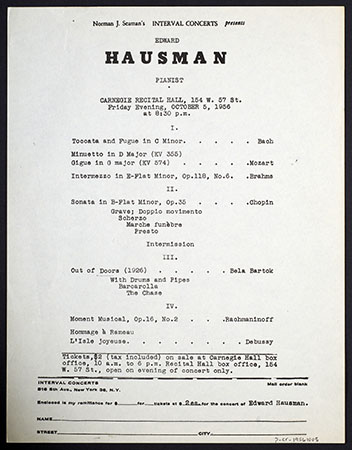
Image courtesy of Carnegie Hall Rose Archives
Some of the works on Hausman's recital program included:
- Piano Sonata no. 2 in B-Flat Minor, op. 25, by Frédéric Chopin. As an example, you can listen to Sergei Rachmaninoff play this sonata.
- "Out of Doors," sz. 81, by Béla Bartók. Here is one version, about 14 minutes long.
- Minuet in D Major (K. 355) by Wolfgang Amadeus Mozart. It's only about two-three minutes long, and here it is played by András Schiff.
- Gigue in G Major (K. 574) by Wolfgang Amadeus Mozart. Another short work, less than two-minutes long, played by András Schiff.
- "Moment Musicaux," no. 2 in E-Flat Minor, Allegretto, op. 16, by Sergei Rachmaninoff. There are six "moments" in this large piece. You can listen to Rachmaninoff himself play the second moment, about two-minutes long.
- "L'isle joyeuse" (L. 106), by Claude Debussy. Listen to Vladimir Horowitz play the piece. It's about six-minutes long.
The Morning Call reported on the successful recital, "NY Critics Laud Recital by Hausman." (The Morning Call,11 October 1956) The paper quoted these two reviews from New York city newspapers.
The New York Times:
A gifted young American pianist … whose opening phrase was proclaimed with authority, with stylistic assurance, straightforward musical feeling and a solid tone, reminiscent of a good, biting organ diapason. The biggest work of the evening, the Chopin B Flat Minor Sonata, was always musical and interesting.
New York Herald-Tribune
What was promising was the degree of his understanding of the style and atmosphere of the different types of works which he performed. The Bartoc (sic) gave the pianist an effectively used opportunity for a display of vigor.
The New York Times review of the recital was actually a bit more modest, “Edward Hausman Makes Piano Debut.” (The New York Times, October 6, 1956, Section F, Page 19)
A gifted young American pianist, Edward Hausman, made his New York debut at Carnegie Recital Hall last night in the last of this season's Interval Concerts. The very opening phrase of Mr. Hausman's recital was proclaimed with authority: with stylistic assurance, straightforward musical feeling and a solid tone reminiscent of a good, biting organ diapason. It was the Bach C minor Toccata and Fugue, and the promise of the opening phrase was borne out in the well-proportioned fugue. Sharp stylistic contrasts followed. The late and infrequently played D major Minuet (K. 355) and G major Gigue (K. 574) of Mozart were superb foils to the familiar E flat minor Intermezzo of Brahms. By his emphasis and savoring of the dissonances of Mozart's Minuet, Mr. Hausman gave the short piece the radical, experimental sound that it doubtless had for Mozart's contemporaries. He also suggested the pessimism and nostalgia of the Brahms without becoming sloppy or sentimental. The biggest work of the evening, the Chopin B flat minor Sonata with the funeral march, is gigantic when played by a giant of the keyboard. Mr. Hausman did not appear in that exalted stature nor did he have the haunted imagination for the sonata's finale. Yet he was always musical and interesting. The excitement Mr. Hausman found in Bartók's "Out of Doors" suite was somewhat external, and he treated Rachmaninoff's Moment Musical, Op. 16, No. 2, and Debussy's "Isle Joyeuse" as virtuoso display pieces, Although, this was grotesquely unfair to Debussy, it was too late to dispel the fine impression of the earlier part of Mr. Hausman's recital. E. D.
These works seem to have been selected by Hausman to demonstrate his manual dexterity and technical expertise. In addition, the inclusion of the Bartok piece shows his comfortableness with contemporary, twentieth-century music.
In 1957, Hausman joined the faculty at Skidmore College in Saratoga Springs, NY. There he taught piano, music history, music theory, non-Western music, and similar courses, before eventually becoming head of the piano department.
His next major performance was with the Boston Pops orchestra on 30 May 1961 in Symphony Hall, Boston, MA. Harry Ellis Dickson, at the time first violinist and assistant conductor, led the orchestra for Hausman in his performance of Sergei Rachmaninoff's Piano Concerto no. 2 in C Minor, op. 18, probably the most famous of the Rachmaninoff piano concertos. Here's a version played by Artur Rubinstein in 1956.
The following year, Hausman again played with the Boston Pops on 12 June 1962. This time the orchestra was led by the Arthur Fiedler, the legendary Pops conductor. Hausman again played a Sergei Rachmaninoff concerto, the Piano Concerto no. 3 in D Minor, op. 30, another famed piano concerto. You can have a listen to Vladimir Horowitz's 1930 world premiere recording of the concerto.
The Morning Call (11 June 1964) published a feature article on Hausman and his family in 1964. Entitled, "Musicians on the Go," the paper noted that Hausman, his wife and their two small children had just returned from a tour of the Far East with concerts across Japan and South Korea. As Hausman was enjoying a year-long sabbatical from Skidmore, he and his wife team taught piano at Musashino College of Music in Tokyo.
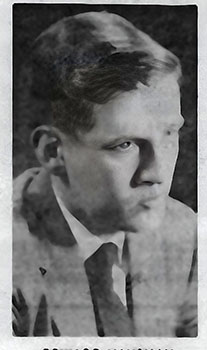
Edward Hausman,1965; photo credit, The Morning Call, 2 May 1965
Hausman had a second Carnegie Hall recital on 6 January 1984. According to The Morning Call, his program included these works (The Morning Call, 25 December 1983):
- Fantasia and Fugue in C Minor (BWV 906), by Johann Sebastian Bach. Listen to an example by Glenn Gould.
- Piano Sonata no. 30 in E Major, op. 109, by Ludwig van Beethoven. Here's a performance available on YouTube.
- "Miroirs" by Maurice Ravel. This is a long work.
- Appasssionato in E Flat Minor from Études-Tableaux, op. 39, by Sergei Rachmaninov. This is a short piece from the larger "Études."
- Piano Sonata no. 6 in A Major, op. 82, by Sergei Prokofiev. Here's an example.
In this second Carnegie Hall recital, Hausman included major sonatas of Beethoven and Prokofiev, providing him the opportunity to display a mature mastery and understanding of these complex, difficult works.
Both recitals clearly demonstrated that Hausman was proficient across all musical periods from baroque to contemporary.
The New York Times ran a somewhat muted review of the performance, "Recital: Edward Hausman." (The New York Times, 8 January 1984)
The largest work on Edward Hausman's Friday evening concert of piano music at Carnegie Recital Hall was Serge Prokofiev's mammoth Sonata No. 6 in A (Op. 82). Mr. Hausman convincingly captured the sonata's panoramic sweep - its mixture of the harsh and the lyrical, the graceful and sardonic. Mr. Hausman is a sober pianist, and some of Prokofiev's grimacing humor eluded him; in addition, he does not have the crystalline technique required for a truly monumental performance. But his comprehension of the music was not to be doubted.
The program also included a performance of Beethoven's Sonata in E (Op. 109); the final set of variations was marked by a sense of repose and inner quietude. Mr. Hausman's traversal of Ravel's ''Miroirs'' was uneven. He was most impressive in the pastel-like ''Vallee des Cloches'' which was thoughtfully executed and sparingly pedaled. ''Alborada del Gracioso,'' on the other hand, lacked bite, seeming rhythmically and dynamically enervated. Tim Page
There is an interesting annotation on the Carnegie Hall official record for this 1984 recital, "the programs were stolen." That's why we don't have a copy of the program like we do for the 1956 recital.
(Here, let me add my thanks to my friends Content Sablinsky, accomplished concert pianist in Charlottesville, VA, and Tom Yenser, musical director in Reading, PA, for their suggestions.)
As mentioned earlier, Hausman did occasionally play in the Slatington area. In August 1964, he played at a ceremony in the auditorium in the current Northern Lehigh Middle School (previously Slatington High School) during Slatington’s centennial celebration.

Photo credit: The 1964 Centennial Celebrating 100 Years of Slatington History DVD
I believe that Hausman's last appearance in the Slatington area might have been at the 26th Gymfana Ganu, a Welsh poetry and song festival, held at the United Presbyterian Church, just south of Slatington in Friedens. That would have been 11 November 1984.
He continued to perform in and around Saratoga Springs.
Edward Hausman retired from Skidmore College in 1988 and died in Saratoga Springs in 2013; his wife had predeceased him in 1987. They were survived by two children.
He had achieved his high school dream of being a concert pianist.